

CG Policy · 2025
In this section7 topics
Corporate Governance Policy
Has a Corporate Governance Policy
Yes
Policy Description
The Company places importance on good corporate governance, as it is considered a crucial mechanism for achieving an efficient, transparent, and auditable management system. This helps build confidence among shareholders, investors, stakeholders, and all relevant parties. Good corporate governance serves as a tool to enhance organizational value, foster competitiveness, and promote the Company's long-term sustainable growth. Furthermore, the Company also pays close attention to internal control systems and risk management.
The Company has promoted and communicated information to employees at all levels throughout the organization via the internal network (Intranet) and new employee orientation, focusing on enhancing knowledge and understanding to ensure compliance with the corporate governance policy and business ethics. The Company's Board of Directors, management, and employees have adhered to the good corporate governance policy and monitored its implementation.
has been reviewed and improved to align with the ASEAN CG Scorecard criteria for implementation and adaptation as appropriate.
Therefore, the Company has established a good corporate governance policy, which covers the following five principles:
Category 1: Rights of Shareholders
Category 2: Equitable Treatment of Shareholders
Category 3: Role of Stakeholders
Category 4: Disclosure and Transparency
Category 5: Responsibilities of the Board
Policy & Practices — Board of Directors
Has Policy & Guidelines for the Board
Yes
Board Guidelines
| Guideline | Detail | |||||||||||||||||||||||||||||||||||||||||||||||||||||||||||||||||||||||||||||||||||||||||||||||||||||||||||||||||||||||||||||||||||||
|---|---|---|---|---|---|---|---|---|---|---|---|---|---|---|---|---|---|---|---|---|---|---|---|---|---|---|---|---|---|---|---|---|---|---|---|---|---|---|---|---|---|---|---|---|---|---|---|---|---|---|---|---|---|---|---|---|---|---|---|---|---|---|---|---|---|---|---|---|---|---|---|---|---|---|---|---|---|---|---|---|---|---|---|---|---|---|---|---|---|---|---|---|---|---|---|---|---|---|---|---|---|---|---|---|---|---|---|---|---|---|---|---|---|---|---|---|---|---|---|---|---|---|---|---|---|---|---|---|---|---|---|---|---|---|
| Nomination of Directors | Director Nomination and Appointment The Nomination and Remuneration Committee will consider and select individuals with suitable qualifications in terms of experience, knowledge, and abilities that will benefit the company and are worthy of being nominated as directors of the company, to be proposed to the Board of Directors meeting and the Shareholders' Meeting for consideration and appointment in accordance with the company's articles of association. In nominating new directors, the company will consider the composition of the Board according to the Board Skill Matrix to assess the necessary qualifications, knowledge, skills, and experience of the directors to be nominated, ensuring that the Board's composition aligns with the business group's operational strategy. For directors whose terms expire at the Annual General Meeting of Shareholders in 2025, the Nomination and Remuneration Committee has considered and proposed to the Board of Directors that these directors be reappointed for another term, as they possess the knowledge, abilities, and experience to support the work of the Board of Directors and are beneficial to the company's direction and operational plans. In screening candidates to be nominated as directors, the Nomination and Remuneration Committee has established guidelines for consideration, taking into account the following components:
The Nomination and Remuneration Committee has considered and defined specific individual attributes for candidates to be nominated as directors in various areas, such as:
The Nomination and Remuneration Committee considers and defines the specific knowledge and expertise required on the Board to enable the Board to formulate strategies and policies, as well as to oversee the effective implementation of those strategies. 3. Director Diversity In addition to the two aforementioned components, the Nomination and Remuneration Committee may also consider establishing guidelines regarding other diversity qualifications for the entire Board. In the year 2025, The Company no additional director nominations and appointments. Board Diversity Policy The Board of Directors recognizes the benefits of board diversity and considers it a crucial factor in enhancing the effectiveness of the Board's decision-making and operations. Diversity is not limited to gender but also includes age, educational background, professional experience, skills, and knowledge. Therefore, the recruitment and appointment of the company's directors will be based on knowledge and ability, using selection criteria that incorporate the benefits of diversity. Board of Directors Composition
Board Expertise
Criteria for Selecting New Directors In the nomination of directors, the company will consider the diversity of qualifications of the Board to support the company's business strategies and sustainable development. The selection of directors depends on the applicants' abilities, with the following criteria for consideration:
Process for Appointing New Directors When appointing new directors (due to a vacancy or to increase the number of directors on the Board), the Board of Directors will follow the selection and appointment procedures for new directors as follows:
Furthermore, if the company has new business strategies beyond its existing operations, it will be necessary to nominate directors with qualifications and experience relevant to the new businesses the company intends to pursue, for submission to the Board of Directors and/or the Shareholders' Meeting for consideration and approval, as the case may be. New Director Orientation The Board of Directors mandates orientation for all new directors to build knowledge and understanding of the company's business operations, preparing them for their duties. Concurrently, it aims to enhance the knowledge and perspectives of all directors, covering good corporate governance, business, industry conditions, technology, or new innovations, to support their effective performance. The Company Secretary acts as the coordinator for various matters as follows:
| |||||||||||||||||||||||||||||||||||||||||||||||||||||||||||||||||||||||||||||||||||||||||||||||||||||||||||||||||||||||||||||||||||||
| Determination of Director Remuneration | The Company sets the remuneration for directors and executives at an appropriate level and at a rate sufficient to retain qualified directors and executives, without excessive remuneration. This level is comparable to companies within the same industry group and is determined by considering the Director Remuneration Survey Report for 2025 from IOD, as well as the experience, duties, scope of roles, and responsibilities. The remuneration for directors each year will be approved by the Nomination and Remuneration Committee, then submitted for approval by the Board of Directors, and subsequently presented for approval by the shareholders' meeting. Executive remuneration will be in accordance with the principles and policies established by the Board of Directors, which will be determined based on the duties and responsibilities, the performance of each executive, and the overall performance of the Company. | |||||||||||||||||||||||||||||||||||||||||||||||||||||||||||||||||||||||||||||||||||||||||||||||||||||||||||||||||||||||||||||||||||||
| Independence of the Board of Directors from the Management | The Board of Directors comprises highly qualified individuals with knowledge, capabilities, and executive-level experience from various organizations. Therefore, they can effectively utilize their experience, knowledge, and capabilities to develop and establish the company's policies and business direction, thereby generating maximum benefit for the company and its shareholders. The Board of Directors plays a crucial role in setting the organization's policies and overall direction, as well as in overseeing, reviewing, monitoring the performance of the management, and evaluating the company's operations to ensure they align with the established plans. The structure of the Board of Directors consists of independent directors accounting for more than one-third of the total number of directors. Currently, the company has a total of 9 directors, divided into 3 executive directors, 2 non-executive directors, and 4 independent directors (including the Chairman of the Board). This board structure ensures a balance of voting power in considering various matters. Furthermore, the Board of Directors and the management clearly delineate their roles, duties, and responsibilities to ensure checks and balances in management. Additionally, various sub-committees have been appointed to assist in the corporate governance of the company.
| |||||||||||||||||||||||||||||||||||||||||||||||||||||||||||||||||||||||||||||||||||||||||||||||||||||||||||||||||||||||||||||||||||||
| Director Development | The Board of Directors has a policy to promote and facilitate training and knowledge sharing for those involved in the company's corporate governance system, including company directors, audit committee members, executives, and the company secretary, to ensure continuous improvement in operations. The company secretary will coordinate with the company directors to attend various courses, such as those offered by the Thai Institute of Directors Association (IOD), the Thai Investors Association, the Federation of Accounting Professions, etc. In 2025, the company's Board of Directors, executives, and company secretary attended the following seminars:
| |||||||||||||||||||||||||||||||||||||||||||||||||||||||||||||||||||||||||||||||||||||||||||||||||||||||||||||||||||||||||||||||||||||
| Board Performance Evaluation | Good Corporate Governance Assessment The company received the results of the 2025 Thai Listed Company Corporate Governance Survey Project. 844 listed companies participated, and the company received a score of 93% (Excellent Level). The survey results are summarized as follows:
Quality Assessment of Annual General Meeting of Shareholders The company received a score in the 2025 Shareholder Meeting Quality Assessment Project from the Thai Investors Association in collaboration with the Securities and Exchange Commission. 827 listed companies participated, and the company received a score of 100 points (exemplary very good level) out of 100 points.
Performance Evaluation of the Board of Directors In accordance with good corporate governance principles for listed companies, it is recommended that the Board of Directors and sub-committees of listed companies conduct self-assessments of their performance at least once a year. This allows the committees to collectively review their performance and make improvements. The evaluations are conducted for both committees and individuals. In 2024, the company arranged for three types of committee performance evaluations for all directors to assess their annual performance, divided into:
Evaluation Process and Criteria Process and Criteria for Performance Evaluation of the Board of Directors, Sub-Committees, and Individual Self-Assessment at the end of each year: The Company Secretary will distribute performance evaluation forms to all committees for annual performance assessment. After each director completes their performance evaluation, the forms will be returned to the Company Secretary to compile the evaluation results for each director and summarize the performance evaluation of each committee for reporting to the Board of Directors. The scoring method is standardized to enable committees to compare evaluation results across topics. 0 = Strongly disagree, or there has been no action on the matter. 1 = Disagree, or there has been little action on the matter. 2 = Agree, or there has been reasonable action on the matter. 3 = Quite agree, or there has been good action on the matter. 4 = Strongly agree, or there has been excellent action on the matter. In summary, the performance evaluation results for each committee for the year 2025 are as follows:
Summary of the performance evaluation of the Board of Directors: Overall, across 4 categories, the average score is good. The category with the highest average score is Category 2: Board Meetings. The topic with the highest score is "Directors are informed of the annual board meeting schedule in advance." The category with the lowest average score is Category 4: Other Matters. The topic with the lowest score is "Relationship between the Board and Management." However, even though it received the lowest score, its average is still rated as good.
Summary of the performance evaluation of individual sub-committees: Overall, across 3 categories, the average score is good. The category with the highest average score is Category 3: Roles, Duties, and Responsibilities of Individual Sub-Committees, which has sufficiently emphasized, spent time considering, reviewing, and complying with the following matters, divided into: 2.1) Audit Committee: 3.76 points, rated as good. The topics with the highest scores are: "Reviewing that the company has accurate and reliable financial statements" and "Reviewing that the company operates in compliance with laws and regulations." The topics with the lowest scores are: "Reviewing for a good internal audit system," "Considering related party transactions and transactions with conflicts of interest to comply with regulations," "Providing opinions on the appointment and removal of the Head of Internal Audit," "Considering the selection, appointment, removal, and proposing remuneration for auditors," and "Ensuring that management establishes an appropriate complaint handling process." However, even though these topics received the lowest scores, their average is still rated as good. 2.2) Nomination and Remuneration Committee Average score of 3.78 points, rated as good The topics with the highest scores are: "Defining qualifications for directors or senior executives to be recruited, consistent with regulations and business characteristics," "Planning continuous training and development for directors," and "Establishing fair methods and criteria for determining remuneration." The topic with the lowest score is "Implementing a succession plan for directors and executives." However, even though it received the lowest score, its average is still rated as good. 2.3) Risk Management Committee Average score of 3.70 points, rated as good The topic with the highest average score is: "Controlling, monitoring, reviewing, and evaluating risk management performance according to the company's defined risk management policy, as well as complying with criteria set by regulators." The topic with the lowest average score is: "Defining policies, acceptable risk levels, and maximum risk levels that the organization will accept, and covering various important types of risks." 2.4) Sustainability Committee: Average score of 4 points, rated as very good. The topic with the highest average score is: "Clearly defining policies, plans, or a sustainability development framework (ESG Framework) that covers environmental, social, and governance dimensions, and monitoring, reviewing performance, and evaluating progress of sustainability operations according to the plan."
Summary of the performance evaluation of the Board of Directors and individual sub-committees: Overall, across 3 categories, the average score is good. The category with the highest average score is Category 1: Board Structure and Qualifications. The topic with the highest score is "Directors possess qualifications, knowledge, and experience suitable for the company's business." In the case of independent directors or sub-committee members assigned duties, "Directors possess qualifications, knowledge, and experience suitable for their assigned roles." The category with the lowest average score is Category 3: Roles, Duties, and Responsibilities of the Board. The topic with the lowest score is "Dedication of time and effort to the company's duties and appropriate control and monitoring of management's operations." Performance Evaluation of the Chief Executive Officer In 2025, the Board of Directors conducted a performance evaluation of the Chief Executive Officer. The Company intends to carry out the performance evaluation of the Chief Executive Officer on an annual basis in accordance with the principles of good corporate governance. The evaluation process considers two main categories. The first category is the progress of the work plan, which assesses the targets set and the status of achievement for each objective. In 2025, the overall results exceeded the established targets. The second category is the assessment of the CEO’s performance across ten key performance dimensions using evaluation topics aligned with the Stock Exchange of Thailand's guidelines, comprising the following 10 aspects:
The overall performance evaluation of the Chief Executive Officer is rated as good. The two topics with the highest average scores are 1) Financial Planning and Performance, and 2) Knowledge of Products and Services. The topic with the lowest average score is Personal Attributes, specifically "Consistent development of various skills necessary for self-potential enhancement" and "Exercising good judgment in resolving sensitive issues, both interpersonal and inter-group problems." The evaluation uses scores from Key Performance Indicators (KPIs) by comparing performance against set targets. The next performance evaluation of the Chief Executive Officer will take place in 2026. | |||||||||||||||||||||||||||||||||||||||||||||||||||||||||||||||||||||||||||||||||||||||||||||||||||||||||||||||||||||||||||||||||||||
| Corporate Governance of Subsidiaries and Associated Companies | Oversight of subsidiaries and associated companies The Company appoints its executives to serve as directors in its subsidiaries. Individuals appointed as directors in subsidiaries have a duty to act in the best interests of the subsidiary. The Company stipulates that such appointed individuals must obtain approval from the Company's Board of Directors before casting votes or exercising voting rights on significant matters at the same level requiring approval from the Company's Board of Directors, if the action were to be undertaken by the Company itself. | |||||||||||||||||||||||||||||||||||||||||||||||||||||||||||||||||||||||||||||||||||||||||||||||||||||||||||||||||||||||||||||||||||||
Policy & Practices — Shareholders and Stakeholders
Has Policy & Guidelines for Shareholders and Stakeholders
Yes
Shareholder & Stakeholder Guidelines
| Guideline | Detail | ||||||||||||||
|---|---|---|---|---|---|---|---|---|---|---|---|---|---|---|---|
| Shareholder | The Company aims to conduct business efficiently, honestly, and transparently by disclosing accurate and complete information to shareholders.
The Rights of Shareholders The Company recognizes and prioritizes the fundamental rights of shareholders and will promote shareholders' exercise of their rights without infringement. These include fundamental rights such as the right to buy, sell, or transfer shares; the right to receive adequate and timely corporate information; the right to attend meetings and vote at shareholder meetings to appoint or remove directors, appoint auditors, and on matters affecting the Company, such as dividend allocation, the establishment or amendment of articles of association and memorandum, capital reduction or increase, etc. In addition to the aforementioned fundamental rights, the Company has also undertaken various actions to promote and facilitate the exercise of rights by all shareholder groups, including institutional investors, at shareholder meetings. Operations Year 2025
The Equitable Treatment of Shareholders The Company has a policy to treat and protect the rights of all shareholders equally and fairly, including executive and non-executive shareholders, Thai or foreign shareholders, major or minor shareholders. The Company has a policy to provide additional meeting options for shareholders who cannot attend in person, allowing them to appoint an independent director or another person to attend and vote on their behalf, as well as providing opportunities for minority shareholders to propose agenda items for the Annual General Meeting and nominate individuals for directorships in advance within a reasonable timeframe. Operations year 2025
Chapter 3 The Role of Stakeholders The Company prioritizes the rights of stakeholders and treats all relevant parties fairly, both internally and externally, and recognizes the important role of all stakeholder groups. Implementation Year 2025
Internal and External Communication The Company emphasizes internal and external communication, with operational procedures covering both internal and external communication. Communication is maintained with the Company's stakeholders, such as directors, executives, employees, customers, consumers, and shareholders.
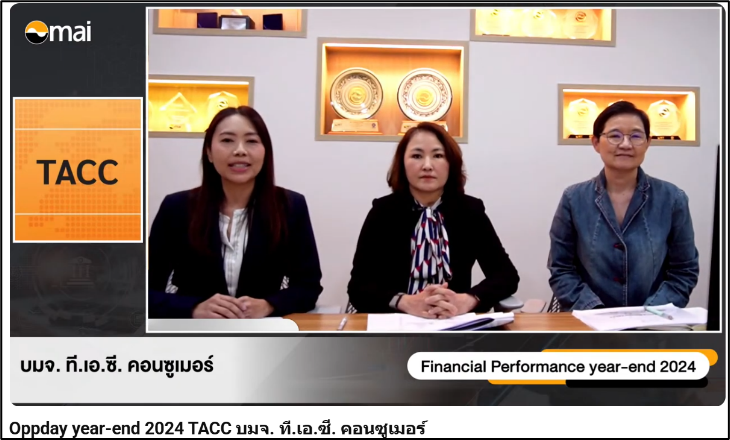
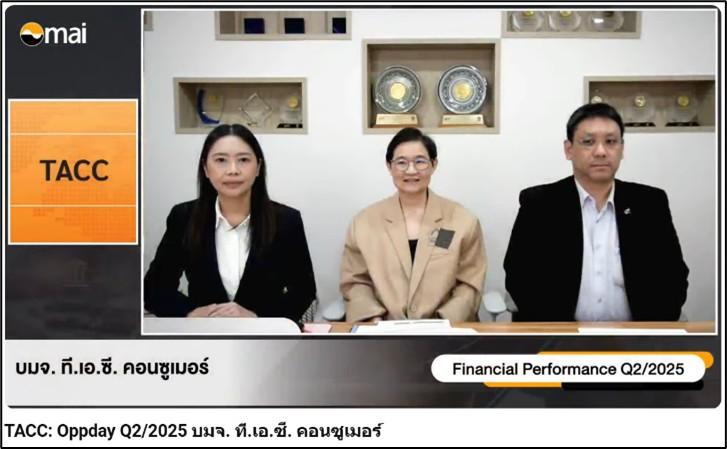
Internal communication involves conveying necessary information to executives and employees by providing important, timely information and compiling key monthly information, with an emphasis on the participation of all executives and employees to achieve organizational goals, through various communication channels such as Line Group, Intranet, E-mail, and the Company's bulletin boards. External communication involves written information reporting, public relations, and sending news to external parties through various Company communication channels such as Website, Facebook, Instagram, E-mail, Youtube, and news dissemination via the Stock Exchange. Internal and external communication involves communicating regular and urgent information to stakeholders regarding important matters, to foster correct and consistent understanding both internally and externally, and to enhance ethics and code of conduct among employees and executives to raise awareness of the importance of good corporate governance, risk management, and internal control. Disclosure and Transparency The Board of Directors prioritizes the accurate, complete, and transparent disclosure of information, including financial reports and general information in accordance with the criteria of the SEC and the Stock Exchange, as well as important information affecting the Company's stock price, which impacts the decision-making process of investors and stakeholders, to ensure that all parties involved with the Company receive information equally. The Company will disseminate information to shareholders and the public through the Stock Exchange's information dissemination channels and media, and the Company's website. Operations year 2025
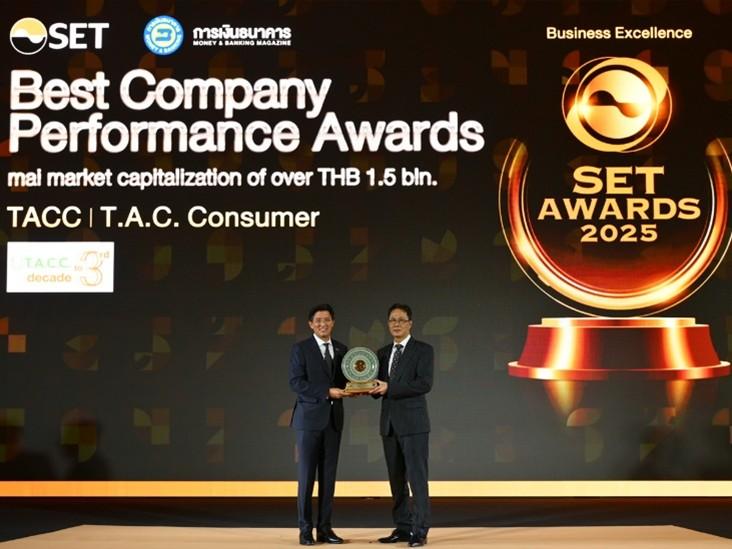
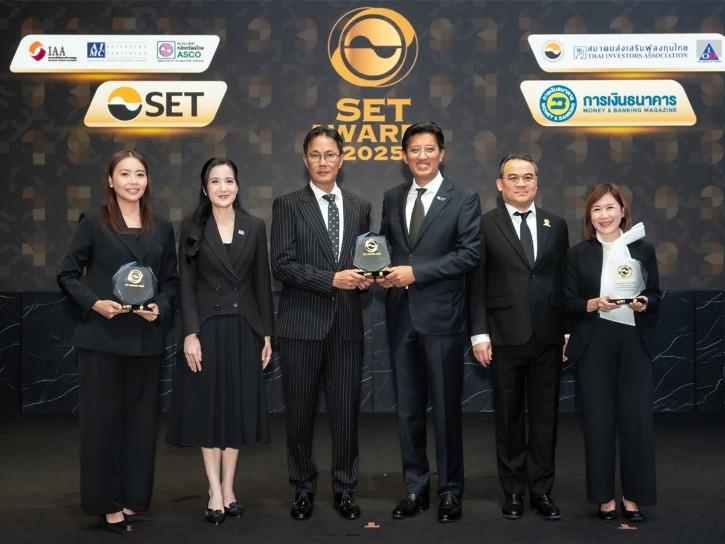
Regarding disclosure and transparency in 2025, this year the Company received 4 awards: 1. Best Company Performance Awards 2025, 2. Outstanding Company Performance Awards 2025, 3. Outstanding CEO Awards 2025, and 4. Outstanding Investor Relations Awards 2025 (9 consecutive years). These valuable awards reflect stable operational growth driven by the organization's leadership vision and the emphasis on continuous and transparent investor relations activities.
Investor Relations Contact Information Contact Person: Ms. Kotchaporn Boon-in Tel: 0-2717-2898 ext. 77 E-mail: ir@tacconsumer.com
Chapter 5 Responsibilities of the Board of Directors The Company emphasizes the roles, duties, and responsibilities of the Board of Directors to safeguard the interests of shareholders and stakeholders.
The Board of Directors consists of highly qualified individuals with knowledge, abilities, and experience at the executive level from various organizations, thus enabling them to leverage their experience, knowledge, and abilities to efficiently develop and set the Company's policies and business direction, and to generate maximum benefit for the Company and its shareholders. The Board of Directors plays a crucial role in setting the organization's policies and overall direction, as well as a significant role in overseeing, inspecting, monitoring management's performance, and evaluating the Company's operations to ensure they align with the planned objectives. The Board of Directors' structure consists of independent directors comprising more than one-third of the total number of directors. Currently, the Company has a total of 9 directors, divided into 3 executive directors, 2 non-executive directors, and 4 independent directors (including the Chairman of the Board). This director structure ensures a balance in voting for various matters. Furthermore, the Board of Directors and management have clearly separated roles, duties, and responsibilities to create checks and balances in management, and have also appointed various committees to assist in the corporate governance of
1.1 The Audit Committee consists of 3 Audit Committee members to perform specific duties and propose matters for the Board of Directors' consideration and acknowledgment. The Audit Committee has rights and duties as defined in its terms of reference. At least one Audit Committee member must possess sufficient accounting knowledge and experience to review the reliability of the Company's financial statements. 1.2 The Nomination and Remuneration Committee consists of Nomination and Remuneration Committee members
1.3 The Risk Management Committee consists of 5 Risk Management Committee members to formulate risk management strategies in line with risk management policies by being able to assess, monitor, and manage risk levels, especially critical risks of the Company, to remain within the organization's defined levels. 1.4 The Sustainability Committee consists of 4 Sustainability Committee members to establish policies and development plans for organizational sustainability, covering environmental, social, and governance dimensions. 1.5 The Investment Committee consists of 4 Investment Committee members. The Investment Committee is to establish investment policies and frameworks, provide recommendations and advice to assist in screening and supporting the Board of Directors in carefully considering investment matters. 1.6 The Risk Management Subcommittee consists of 6 Risk Management Subcommittee members to perform duties in considering problems or risk factors that may arise in the Company's business operations and to find ways to reduce or manage risks to the lowest possible level, and will regularly report to the Risk Management Committee. The Company has a policy to separate the positions of Chairman of the Board, Chief Executive Officer, and Managing Director into different individuals to prevent any single individual from having absolute power over any specific matter. The Board of Directors will define the authority and duties, and select individuals to hold such positions. The Board of Directors has appointed a Company Secretary to undertake duties and responsibilities in accordance with the Securities and Exchange Act, as follows: 1) Oversee and advise directors and executives on compliance with laws, regulations, rules, and the Company's articles of association, and monitor to ensure correct and consistent compliance. 2) Responsible for organizing Board of Directors' meetings and shareholder meetings, as well as overseeing coordination to ensure compliance with the resolutions of such meetings. 3) Ensure that the disclosure of information and information reports under responsibility comply with the regulations and requirements of the Stock Exchange of Thailand and the Securities and Exchange Commission, including relevant laws. 4) Prepare and maintain documents including the register of directors, notices of Board meetings and Board meeting minutes, notices of shareholder meetings and shareholder meeting minutes, the Company's annual report, and reports on directors' and executives' interests, and perform other actions as required by law or announcements of the Capital Market Supervisory Board. 2. Roles, Duties, and Responsibilities of the Board of Directors The Company requires its directors to comply with the Code of Best Practices for listed companies, in accordance with the guidelines of the Stock Exchange of Thailand. The Board of Directors must understand and be aware of their roles, duties, and responsibilities, and must perform their duties in accordance with the law, the Company's objectives, and articles of association, as well as resolutions of shareholder meetings, with honesty and integrity, prioritizing the interests of the Company and its shareholders. The Board of Directors sets the Company's policies, business objectives, business plans, and budget, and oversees management to ensure operations are conducted efficiently and effectively in accordance with the established policies, plans, and budget, for the maximum benefit of the Company and its shareholders as a whole. Roles and Duties of the Chairman of the Board According to Article 27 of the Company's Articles of Association, it is stipulated that “For calling a Board meeting, the Chairman or assigned person shall send a notice of meeting to directors at least 7 days before the meeting date, unless in urgent cases to protect the Company's rights or benefits, the meeting may be notified by other means and scheduled earlier.” In cases where two or more directors request a Board meeting, the Chairman shall set the date and call the meeting within 14 days from the date of such request.” And to clearly separate the powers and duties in policy-making and management of the Company, the Company stipulates that the Chairman of the Board and the Chief Executive Officer are different individuals. The Chairman of the Board has the following roles and duties:
Scope of Authority, Duties, and Responsibilities of the Board of Directors 1. The Board of Directors has the authority, duties, and responsibilities to manage and operate the Company's business in accordance with the law, objectives, articles of association, and resolutions of shareholder meetings, with honesty, integrity, and due care to protect the Company's interests. 2. Ensure the preparation of the Company's balance sheet and profit and loss statement at the end of the Company's accounting period, audited by the auditor, and present them to the shareholders' meeting for consideration and approval. 3. Establish the Company's objectives, guidelines, policies, business plans, and budget, including monitoring and supervising management's administration and operations to ensure efficiency and effectiveness in accordance with established policies, plans, and budget. 4. Review, examine, and approve the Company's policies, directions, strategies, and business plans proposed by management. 5. Continuously monitor operations to ensure compliance with plans and budgets. 6. Ensure the Company has appropriate and efficient accounting systems and reliable financial reporting and auditing, as well as adequate and appropriate internal control and internal audit systems. 7. Consider and establish a comprehensive Risk Management policy for the entire organization and oversee the implementation of risk management systems or processes with appropriate mitigating measures and control methods to reduce impacts on the Company's business. 8. Consider and define the management structure, has the authority to appoint the Executive Board, Managing Director, and other subcommittees as appropriate, including defining the scope of authority and responsibilities of the appointed Executive Board, Managing Director, and various subcommittees. However, the delegation of authority within the defined scope must not be such that the Executive Board, Managing Director, and various subcommittees can consider and approve transactions that may have conflicts of interest or any other conflicts of interest with the Company or its subsidiaries (if any), unless it is an approval of transactions that are in accordance with policies and criteria already considered and approved by the Board of Directors. 9. Prepare the annual report of the Board of Directors and be responsible for the preparation and disclosure of financial statements to reflect the financial position and operating results of the past year, and present them to the shareholders' meeting for consideration and approval. 10. Supervise and oversee the Company's management and various operations to comply with established policies, securities and exchange laws, announcements of the Capital Market Supervisory Board, regulations of the Stock Exchange of Thailand, such as connected transactions and the acquisition or disposal of significant assets, as long as they do not conflict with
11. The Board of Directors may delegate authority to one or more directors or any other person to perform any action on behalf of the Board of Directors, under the supervision of the Board of Directors, or may delegate authority to such persons as the Board of Directors deems appropriate and for a period deemed appropriate by the Board of Directors. The Board of Directors may revoke, withdraw, change, or amend such delegation of authority as deemed appropriate. However, such delegation of authority must not be such that the said person can consider and approve transactions in which they or a person who may have a conflict of interest, has an interest, or may have any other conflict of interest with the Company or its subsidiaries (if any), as defined in the announcements of the Capital Market Supervisory Board and/or the Stock Exchange of Thailand and/or any other relevant authorities, unless it is an approval of transactions that are in accordance with policies and criteria already considered and approved by the Board of Directors. Powers of the Board of Directors 1. Approve the preparation and implementation of the organizational chart. 2. Approve changes in duties and responsibilities for Assistant Managing Director level and above. 3. Approve the annual operational plan and budget, and the operational plan (including capital and expense budgets). 4. Approve investment budgets and the purchase of fixed assets exceeding the authority of the Executive Board. 5. Approve off-budget investment expenditures exceeding the authority of the Executive Board. 6. Approve the appointment of the Audit Committee and the Executive Board. 7. Approve staffing levels outside the annual budget for Assistant Managing Director level and above. 8. Approve the determination of wage rates within/outside the annual budget for Assistant Managing Director level and above. 9. Approve the hiring and appointment of employees outside the annual budget for Assistant Managing Director level and above. 10. Approve annual performance evaluations and consideration of salary/bonus adjustments and promotions for the Chief Executive Officer level. 11. Approve the appointment and transfer of employees at the Assistant Managing Director level and above. 12. Approve the termination of employment for the Chief Executive Officer level. 13. Approve termination of employment with legal compensation for the Chief Executive Officer level, and termination without
14. Approve the purchase of machinery according to the investment budget and other assets exceeding the authority of the Executive Board. 15. Approve employee advances for company expenses, exceeding the authority of the Executive Board. 16. Approve other expenses in the Company's business exceeding the authority of the Executive Board. 17. Approve off-budget expenses exceeding the authority of the Executive Board. 18. Approve the establishment or amendment of financial policies. 19. Approve the appointment/change of authorized signatories for withdrawals with banks/financial institutions, and the opening/closing of
20. Approve the establishment/amendment of accounting policies/principles. 21. Approve the write-off/disposal of bad debts, fixed assets, and obsolete/deteriorated inventory assets exceeding the authority of the Executive Board. Scope of Authority, Duties, and Responsibilities of the Audit Committee 1. Review to ensure that the Company's financial reporting is accurate and adequate. 2. Review to ensure that the Company has appropriate and effective internal control and internal audit systems, and consider the independence of the internal audit unit, as well as approve the appointment, transfer, or dismissal of the head of the internal audit unit or any other unit responsible for internal audit. 3. Review to ensure that the Company complies with securities and exchange laws, Stock Exchange regulations, and laws related to the Company's business. 4. Consider, select, propose the appointment and dismissal of independent individuals to serve as the Company's auditors, and propose their remuneration, as well as attend meetings with the auditors without management present, at least once a year. 5. Consider connected transactions or transactions that may have conflicts of interest in accordance with laws and Stock Exchange regulations, to ensure that such transactions are reasonable and provide the utmost benefit to the Company. 6. Prepare the Audit Committee's report to be disclosed in the Company's annual report. Such report must be signed by the Chairman of the Audit Committee and must include at least the following information: (a) Opinions regarding the accuracy, completeness, and reliability of the Company's financial reports. (b) Opinions regarding the adequacy of the Company's internal control system. (c) Opinions regarding compliance with securities and exchange laws, Stock Exchange regulations, or laws related to the Company's business. (d) Opinions regarding the suitability of the auditor. (e) Opinions regarding transactions that may have conflicts of interest. (f) Number of Audit Committee meetings and attendance of each Audit Committee member. (g) Overall opinions or observations received by the Audit Committee from performing duties according to the Charter. (h) Other items that shareholders and general investors should be aware of, within the scope of duties and responsibilities assigned by the Board of Directors. 7. Perform any other duties assigned by the Company's Board of Directors with the approval of the Audit Committee. Qualifications of Independent Directors Independent directors are individuals who fully meet the qualifications specified in the announcements of the Capital Market Supervisory Board and relevant Stock Exchange announcements, as follows:
After being appointed as an independent director with the characteristics mentioned above, the independent director may be assigned by the Board to make decisions regarding the operations of the Company, its subsidiaries, associated companies, same-tier subsidiaries, major shareholders, or controlling persons of the Company, and can make decisions as a collective body. Scope of Authority, Duties, and Responsibilities of the Nomination and Remuneration Committee 1. Consider the structure, composition, and qualifications of the Company's directors. 2. Select and nominate individuals with appropriate knowledge and abilities for the Company's business, and who are suitable to be proposed as directors in case of a vacancy, to be presented to the Board of Directors or the shareholders' meeting for consideration and appointment. 3. Consider the development plan for the succession plan of the Board of Directors and senior executives. 4. Consider proposing the remuneration structure for directors, including compensation, welfare benefits, meeting allowances, and other financial and non-financial benefits as agreed. 5. Evaluate the performance of the Board of Directors and report to the Board of Directors annually. 6. Consider proposing the remuneration structure for the Chief Executive Officer, including salary, bonus, provident fund, and social security. 7. Perform any other duties assigned by the Board of Directors related to nomination and compensation. Scope of Authority, Duties, and Responsibilities of the Risk Management Committee
Scope of Authority, Duties, and Responsibilities of the Sustainability Committee
has an interest or may have any other conflict of interest with the Company or its subsidiaries and/or related companies, the Executive Board has no authority to approve such matter. Such matter must be submitted to the Board of Directors' meeting and/or the shareholders' meeting (as the case may be) for further approval, unless it is an approval of transactions that are in the ordinary course of business and normal trade conditions, in accordance with the announcements of the Capital Market Supervisory Board and/or the Stock Exchange of Thailand and/or relevant authorities. Scope of Authority, Duties, and Responsibilities of the Risk Management Subcommittee
Scope of Authority, Duties, and Responsibilities of the Managing Director 1. Control and oversee the Company's operations and/or daily administration. 2. Prepare the Company's policies, business plans, including business strategies, and annual budget to be submitted to the Executive Board and the Board of Directors for further consideration and approval. 3. Oversee the Company's operations or performance to comply with policies, plans, and budgets approved by the Company's Board of Directors, including inspecting, monitoring, and evaluating the Company's performance to align with established policies, and has the duty to report operational and management results, including progress, to the Executive Board, Audit Committee, and Board of Directors. 4. Consider and approve the Company's ordinary business transactions in accordance with the investment budget or annual budget approved by the Board of Directors, with the amount for each item as specified in the approval authority matrix already approved by the Board of Directors, but not exceeding the annual budget approved by the Board of Directors, including entering into various related contracts. 5. Has the authority to consider and approve expenditures for the Company's ordinary business operations in accordance with the budget approved by the Board of Directors and in line with the approval authority already approved by the Board of Directors. 6. Has the authority to approve staffing levels, the hiring and appointment of employees, the determination of wage rates and the transfer of employees, including considering and defining the duties and responsibilities of each department and position for employees below the level of department manager as approved by the Board of Directors. 7. Has the authority to issue orders, regulations, announcements, and various records to ensure the Company's operations comply with policies and serve the Company's interests, as well as to maintain internal organizational discipline. 8. Has the authority to delegate powers to one or more other persons to perform any action under the supervision of the Managing Director, or may delegate powers to such persons as the Managing Director deems appropriate and for a period deemed appropriate. The Managing Director may revoke, withdraw, change, or amend the delegated persons or the delegation of powers as deemed appropriate. 9. Perform other duties as assigned by the Executive Board or the Board of Directors. In any matter where the Managing Director, or a person authorized by the Managing Director, or a person who may have a conflict of interest (as defined by the Capital Market Supervisory Board and/or the Stock Exchange of Thailand and/or relevant authorities) has an interest or conflict of interest with the Company and/or its subsidiaries and/or related companies, the Managing Director has no authority to approve such matter. Such matter must be submitted to the Board of Directors' meeting and/or the shareholders' meeting (as the case may be) for further approval, unless it is an approval of transactions that are in the ordinary course of business and normal trade conditions, in accordance with the announcements of the Capital Market Supervisory Board and/or the Stock Exchange of Thailand and/or relevant authorities. | ||||||||||||||
| Employee | The Company prioritizes the rights of stakeholders and treats all relevant parties, both internal and external, fairly. It recognizes the significant role of all stakeholder groups. For the employee group, these are as follows:
| ||||||||||||||
| Customer | The Company prioritizes the rights of its stakeholders and treats all relevant parties, both internal and external, fairly. It recognizes the significant role of all stakeholder groups. For the customer group, these considerations are as follows:
| ||||||||||||||
| Business competitor | The Company prioritizes the rights of stakeholders and treats all involved parties, both internal and external to the Company, fairly. It recognizes the important role of all stakeholder groups. For the group of trade competitors, the details are as follows:
| ||||||||||||||
| Business partner | The Company prioritizes the rights of stakeholders and treats all involved parties, both internal and external, fairly, recognizing the important role of all stakeholder groups. For the business partner group, these are as follows:
| ||||||||||||||
| Creditor | The Company prioritizes the rights of stakeholders and treats all related parties, both internal and external, fairly. It recognizes the significant role of all stakeholder groups. For creditors, these are as follows:
| ||||||||||||||
| Government agency | The Company places importance on the rights of stakeholders and treats all involved parties fairly, both internal and external to the Company, and recognizes the important role of all stakeholder groups. For the group of government agencies or the public sector, these are as follows: The Company prioritizes government agencies or the public sector as stakeholders, having established guidelines for employees to act appropriately. | ||||||||||||||
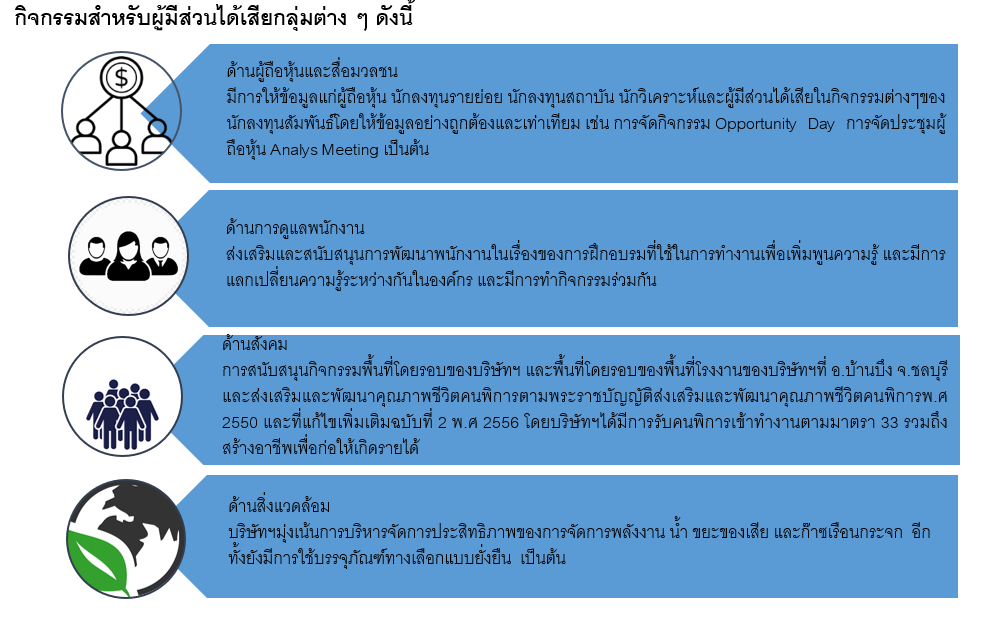
| Community and society | The company prioritizes the rights of stakeholders and treats all relevant parties, both internal and external, fairly. It recognizes the important role of all stakeholder groups. For the community and society group, these are as follows:
|






Code of Conduct
Has a Business Code of Conduct
Yes
Code of Conduct Description
Company's Code of Conduct and Business Ethics Guidelines
The company believes that the Code of Conduct and Business Ethics are fundamental to strengthening and enhancing good corporate governance, and are crucial for stability and sustainable growth, as well as supporting the company in achieving its
stated objectives. Therefore, the company promotes that its business operations and the performance of duties by its relevant personnel adhere to these ethical and code of conduct guidelines.
Those Obligated to Comply
Those obligated to comply with these business ethics and code of conduct guidelines include the company, its directors, executives, employees, temporary staff, consultants, as well as representatives or those authorized to act on behalf of the company or the aforementioned individuals.
Fundamental Principles
The fundamental principles of business ethics and code of conduct are:
1.1 Perform duties with honesty, integrity, morality, and responsibility.
1.2 Maintain confidentiality and do not use inside information or confidential information to seek undue personal gain or benefit for others.
1.3 Prevent or avoid any actions that may lead to conflicts of interest.
1.4 Conduct oneself as a professional with knowledge, expertise, and meticulous prudence.
Business Ethics and Code of Conduct Guidelines
The company (which includes those obligated to comply as specified) shall adhere to the following business ethics and code of conduct guidelines:
Integrity
The company should uphold and maintain integrity as a core principle in its business operations.
Compliance with Laws and Regulations
The company will conduct its business in accordance with laws and official regulations and will not assist, promote, or support any unlawful activities or transactions.
The company should apply its knowledge, ability, expertise, prudence, and care in providing quality services to clients as a professional.
Good Management and Efficient and Stringent Internal Control
The company will establish good management and risk management systems, as well as efficient and stringent internal control systems.
Standards for Operators
The company will comply with generally accepted standards related to its business operations.
Treatment of Various Stakeholder Groups
The company prioritizes good treatment of various stakeholders based on appropriate mutual cooperation and support, specifically:
The company should treat customers, business partners, or competitors with mutual understanding and good cooperation.
The company should offer quality products to customers with goodwill and generosity.
The company should protect and maintain the interests of its shareholders.
The company will support social missions as appropriate, as well as participate in activities for public benefit, education, and national development.
Management of Conflicts of Interest
The company will appropriately manage or prevent actual or potential conflicts of interest related to its business operations and will not seek any unlawful benefits or act contrary to official regulations.
Client Confidentiality
The company will securely and appropriately store, maintain, and protect client confidential information and will not disclose such confidential information to others, unless with the client's consent or as required by law.
Communication of Product or Service Information to Customers
The company will communicate information about its products or services to ensure customers have a correct understanding.
Providing Advice or Acting on Behalf of Clients
The company will exercise reasonable prudence in providing advice or making any decisions on behalf of clients, taking into account the appropriateness of each client's situation.
Custody and Preservation of Securities or Assets
The company will establish a system for the secure and appropriate custody, preservation, protection, and safeguarding of any securities or assets entrusted by clients to the company's care.
Maintaining Good Relationships with Authorities
The company will consistently promote the establishment and maintenance of good relationships with authorities, such as cooperating with authorities as appropriate and complying with official recommendations.
Data Recording and Reporting
The company will record data and prepare reports accurately and reliably.
Service Provision and Operations
The company should monitor developments and changes, initiate innovations to create customer satisfaction, and dedicate its capabilities to operational performance.
Receiving gifts or incentives from customers or other individuals
The company will not solicit, request, or accept money, gifts, prizes, or any other forms of compensation from customers or other individuals, except for customary courtesies.
Upholding a good reputation
The company will uphold its good reputation and should refrain from actions that could bring disrepute to the company.
Individual Rights and External Activities
The company should respect individual rights as stipulated by law and should promote and support participation in various external activities. Such activities must:
Do not negatively impact the company's good reputation and image.
Not to obstruct or significantly impede the dedication of time or the commitment of abilities in performing duties.
Not contrary to the business ethics and code of conduct guidelines.
Avoid creating conflicts of interest.
Not contrary to law and good morals.
Code of Conduct and Business Ethics for Directors, Executives, and Employees
The company has established and announced the Code of Conduct and Business Ethics for directors, executives, and employees, making it widely known through the employee handbook and the company website. All personnel must study, understand, and consistently adhere to these written guidelines as fundamental principles and practices, as follows:
Fundamental Principles of Ethics and Morality
Perform duties with honesty, integrity, morality, and responsibility.
1.1) Maintain confidentiality and do not use inside information or confidential information to seek personal gain or
others improperly.
1.2) Prevent or avoid any actions that may lead to conflicts of interest.
1.3) Conduct oneself as a professional with knowledge, expertise, and meticulous prudence.
Code of Conduct and Ethics Guidelines
The company's personnel, including directors, executives, employees, temporary staff, consultants, representatives, or those authorized to act on behalf of the company or the aforementioned individuals, shall adhere to the following business ethics and code of conduct guidelines:
Conduct and Behavior
Perform duties in accordance with laws related to business operations, objectives, company regulations, corporate governance principles, and resolutions of shareholders' meetings.
Seek knowledge and experience to enhance one's own competence, thereby improving the efficiency and effectiveness of work performance.
Adhere to moral principles and do not seek positions, favors, or any other undue benefits from supervisors or any other individuals.
Abstain from vices and all narcotics. Do not behave in a manner that may tarnish one's own and the company's honor and reputation, such as not accumulating excessive debt, not indulging in any form of gambling, and not being involved with any type of illicit drugs.
etc.Do not engage in any occupation or profession, or perform any act that would affect one's duties or the reputation of oneself and the company.
Avoid financial obligations with individuals doing business with the company or among employees themselves, which includes lending money, soliciting various contributions, participating in rotating credit schemes, etc., except for charitable and public activities.
Do not seek undue benefits, whether directly or indirectly.
Do not engage in any act that involves managing or administering any other company in a manner that undermines the company's interests or benefits any individual or legal entity, whether for personal gain or for the benefit of others.
Maintain and collaboratively foster unity within the team.
Treatment of Colleagues
Foster teamwork by cooperating and supporting each other for the overall benefit of the company's work.
Treat colleagues with courtesy, kindness, and good interpersonal skills, adapting oneself to work effectively with others, and not withholding necessary information for colleagues' work.
Respect others by not claiming others' work as one's own.
Supervisors shall conduct themselves in a respectable manner and serve as good role models for their subordinates, as well as be courteous to subordinate employees and colleagues at all levels.
Subordinates shall treat supervisors with respect.
Subordinates shall heed the advice of their supervisors and not bypass their direct supervisors, unless instructed by a higher-level supervisor. They shall also be courteous to employees and colleagues at all levels.
Avoid disclosing or criticizing information or stories about other employees, whether related to work performance or personal matters, in a manner that could cause harm to the employee or the overall image of the company.
Do not engage in any immoral acts or sexual harassment towards other employees, where such acts cause distress, annoyance, or create a discouraging, hostile, or aggressive work environment, including unreasonably disrupting the work of other employees. Such behavior includes molestation, indecency, or sexual assault, whether verbal or physical.
Treatment of the Company
Perform duties with responsibility, honesty, integrity, dedication, and commitment of physical and mental effort to work, as well as comply with the company's rules and policies, values, and good traditions, prioritizing the company's interests.
Perform duties in accordance with occupational health, safety, and working environment policies.
Strictly maintain the confidentiality of customers, business partners, and the company, taking care to prevent confidential documents or information from leaking or falling into the hands of unauthorized persons, which could cause damage to the company.
Do not defame or engage in any actions that lead to internal division or damage within the company or to individuals associated with the company.
Maintain one's honor to be recognized within the company.
Build good relationships by cooperating with society, communities, government agencies, and relevant organizations in providing information. Employees at all levels should perform their duties carefully and prudently for the benefit of the company and the public.
Pay attention and assist in any actions that will preserve the working environment and atmosphere, as well as develop the organization towards excellence.
Avoid giving and/or receiving gifts, hospitality, or any benefits from business partners or parties involved with the company's business, except for the legitimate business interests of the company or during customary festivals or traditions of appropriate value, which the recipient should consider. If a gift received in the form of money or an item exceeds three thousand baht in value, it should be refused and returned.
Do not participate in or conceal any actions that may conflict with the company's interests or participate in concealing any illegal acts.
Treatment of Customers, Business Partners, or Competitors
Treat customers, business partners, or competitors with mutual understanding and good cooperation.
Offer quality services to customers with warm friendship and generosity.
Exercise reasonable prudence in providing advice or making any decisions on behalf of clients, taking into account the appropriateness of each client's situation.
Protect and maintain the interests of shareholders.
Support social missions as appropriate, as well as participate in activities for public benefit, education, and national development.
The company mandates that it is the duty and responsibility of all directors, executives, and employees to study, understand, and strictly adhere to the Business Ethics and Code of Conduct Handbook. Any employee with questions regarding the guidelines should seek advice from their supervisor. Employees who violate the code of conduct and business ethics, or allow their subordinates to violate it, will face disciplinary action, which may include termination of employment, compensation for damages, and civil or criminal penalties.
In 2025, the Company promoted the implementation and monitoring of compliance with the Company’s Code of Conduct and Business Ethics, as well as the Code of Conduct and Business Ethics for directors, executives, and employees. The Company also communicated these principles to ensure that 100% of directors, executives, and employees acknowledged and understood the guidelines and practices relating to the Company’s Code of Conduct and Business Ethics, as well as those applicable to directors, executives, and employees.
In 2025, there were no reported cases of violations of the Company’s Code of Conduct and Business Ethics.
Code of Conduct Practices
| Guideline | Detail |
|---|---|
| Prevention of Misuse of Inside Information | Policy on Conflicts of Interest The Company has established measures to prevent potential conflicts of interest arising from inter-company transactions involving
The Company shall arrange for the Audit Committee, or the auditor, or an independent expert, as the case may be, to review and provide opinions on the appropriateness of the price and the reasonableness of the transaction. Such inter-company transactions will be disclosed in the notes to the financial statements audited or reviewed by the Company's auditor. Furthermore, the Company communicates its policy on conflicts of interest within its Code of Conduct and Corporate Governance to directors and executives via email, reaching 100% of directors and executives. Communication to employees is conducted through the Company's Intranet system, reaching 100% of employees. In 2025, the Company received no complaints regarding misconduct by directors and executives, or regarding the misuse of inside information, or regarding conflicts of interest. Prevention of Conflicts of Interest To prevent conflicts of interest, the Company has clearly established a policy for managing transactions that may give rise to conflicts of interest. This policy defines the approval process for connected transactions between the Company and individuals who may have a conflict of interest. In cases where a director has an interest in any agenda item, that director shall not have the right to vote on such item. Furthermore, the Board of Directors has established policies and procedures to prevent executives and related parties from using the Company's internal information for personal gain. For the approval of inter-company transactions, the responsible department will initially evaluate such transactions by gathering information and analyzing whether the transaction is reasonable, serves the Company's best interests, and is at a fair price (e.g., asset purchases). The transaction will then be presented for approval according to established procedures, with executives or directors who have an interest in the transaction not participating in its approval. Additionally, the Audit Committee will jointly oversee such inter-company transactions to ensure they are necessary and conducted at a fair price. |
| Anti-corruption | T.A.C. Consumer Public Company Limited recognizes the importance of management and business operations under good corporate governance principles, adhering to honest and transparent business practices. It instills awareness among all executives and employees in the organization about the dangers of corruption, fostering correct values and attitudes among employees to perform their duties with integrity, not seeking personal gain from their positions, or providing any undue benefits to others, whether directly or indirectly. It also prohibits using opportunities from their positions within the company to seek personal or family benefits, and aims to increase confidence among all stakeholders. The anti-corruption policy is disclosed to all employees for their compliance. Employees have been sent to attend introductory anti-corruption training courses to understand the principles and procedures for establishing an anti-corruption system within the organization. In accordance with the resolution of the Board of Directors at Meeting No. 6/2025, the Company therefore issued an anti-corruption policy. (replacing the previous policy announced on August 5, 2015 ) which has been revised to be appropriate for the current situation and consistent with the criteria for participating in the project Thai Private Sector Collective Action Against Corruption or Thai Private Sector Collective Action Against Corruption (CAC) to be adopted as principles and guidelines, as follows: To ensure that the Company has appropriate policies for defining responsibilities, practices, and operational requirements to prevent corruption in all business activities of the company, and to mitigate corruption risks, the Company has established a written “Anti-Corruption Policy” to serve as clear guidelines for business operations and to foster a sustainable organization. Good practices to prevent and combat corruption.
In addition to business risk management, the Company has incorporated corruption risk as part of its risk management process. This includes actions to identify and assess the Company's corruption risks, with such risks being jointly evaluated and determined. The company's internal control system considers Operational Control that can be used to prevent each risk. specified in the risk assessment form. In 2025, the Company has officially declared its intention to join the Thai Private Sector Collective Action Against Corruption (CAC) to demonstrate its stance on prioritizing anti-corruption. This reinforces its firm commitment to conducting business with transparency, accountability, and adherence to good corporate governance principles to build trust and value for all stakeholders. Furthermore, there are also Training course arrangement clearly related to anti-corruption measures, with employees The company's headquarters and factories participated 100%, and all employees were informed of the policy. including The Company communicates anti-corruption measures for executives, employees and anti-corruption measures are disclosed to the public and business partners. clearly. Furthermore, in 2025, the Company did not receive any whistleblowing information regarding fraud or corruption. |
| Whistleblowing and Protection of Whistleblowers | Whistleblowing or Complaints If directors, executives, and employees have doubts or evidence that any director, executive, employee, or person acting on behalf of the company has been involved in corruption, they must report or make a whistleblowing report or complaint to the company as follows:
By submitting complaints through the following channels:
23rd Floor, UM Tower, 9/231-233 Ramkhamhaeng Road, Suan Luang Subdistrict, Suan Luang District Bangkok 10250
https://th-th.facebook.com/TACConsumer/
|
| Preventing the Misuse of Inside Information | The Company's Board of Directors has established measures to prevent the misuse of inside information (Insider Trading) by relevant persons, including directors, executives, employees, and workers, as well as their spouses and minor children who are privy to such information. Penalties for disclosing company information or using company information for personal gain have also been stipulated in accordance with the policy on preventing the use of inside information for personal benefit. Furthermore, directors and executives of the Company, including their spouses and minor children, are prohibited from trading the Company's securities during the one-month period prior to the public disclosure of financial statements. The Company has informed its directors and executives of their duty to report their own, their spouses', and their minor children's holdings of the Company's securities, as well as to report changes in such holdings to the Securities and Exchange Commission in accordance with Section 59 and the penalties stipulated in the Securities and Exchange Act B.E. 2535 (1992). |
Promoting Compliance with the Code of Conduct
Promotes Compliance by Directors, Executives and Employees
Yes
Description
Business Ethics and Morality for Directors, Executives, and Employees.
The Company has established and announced the Principles of Business Ethics and Morality for Directors, Executives, and Employees, making them generally known through the employee handbook and the company website. These principles must be studied, understood, and adhered to.
regularly, both in written form, adhering to them as principles and guidelines, as follows:
Fundamental Principles of Ethics and Morality.
-
Perform duties with honesty, integrity, morality, and responsibility.
1.1) Maintain confidentiality and do not use inside information or confidential information for personal gain or
others improperly.
1.2) Prevent or avoid any actions that may lead to conflicts of interest.
1.3) Conduct oneself as a professional with knowledge, expertise, and due diligence.
Principles of Ethics and Morality.
Company personnel, including directors, executives, employees, as well as contractors, consultants, representatives, or those assigned to act on behalf of the company or the aforementioned individuals, shall adhere to the following principles of business ethics and morality:
Conduct and Behavior.
-
Perform duties in accordance with laws related to business operations, objectives, company regulations, corporate governance principles, and resolutions of shareholders' meetings.
-
Seek knowledge and experience to enhance one's capabilities, thereby improving the efficiency and effectiveness of work performance.
-
Uphold moral principles and do not seek positions, favors, or any other undue benefits from supervisors or any other individuals.
-
Abstain from vices and all addictive substances. Do not behave in a way that may tarnish one's honor and reputation or that of the company, such as not being heavily indebted, not being addicted to any form of gambling, and not being involved with any type of illicit drugs.
etc. -
Do not engage in any occupation or profession, or perform any action that may affect one's duties or the reputation of oneself and the company.
-
Avoid financial obligations with individuals doing business with the company or among employees themselves, which includes lending money, soliciting donations, participating in informal rotating credit schemes (Chare), etc., except for charitable and public activities.
-
Do not seek undue benefits, whether directly or indirectly.
-
Refrain from any action that involves managing or administering any other company in a manner that undermines the company's interests or benefits any individual or legal entity, whether for one's own benefit or that of others.
-
Maintain and jointly foster unity within the team.
Treatment of Colleagues.
-
Foster teamwork by cooperating and assisting each other for the overall benefit of the company's work.
-
Treat colleagues with courtesy, kindness, and good interpersonal skills, adapting oneself to work with others, and not withholding necessary information for colleagues' work.
-
Respect others by not claiming others' work as one's own.
-
Supervisors shall conduct themselves in a respectable manner and serve as good role models for their subordinates, as well as be courteous to subordinate employees and colleagues at all levels.
-
Subordinates shall treat supervisors with respect.
-
Subordinates shall listen to the advice of their supervisors and not bypass their direct supervisors in performing tasks, unless instructed by a higher-level supervisor. They shall also be courteous to employees and colleagues at all levels.
-
Avoid disclosing or criticizing information or stories about other employees, whether related to work performance or personal matters, in a manner that could cause damage to the employee or the overall image of the company.
-
Do not engage in any immoral acts or sexual harassment towards other employees, where such acts cause distress, annoyance, or create a discouraging, hostile, or aggressive work environment, including unreasonably disrupting the work of other employees. Such behavior includes molestation, indecency, or sexual assault, whether verbal or physical.
Treatment of the Company.
-
Perform duties with responsibility, honesty, integrity, dedication, and commitment of physical and mental effort to work, as well as adhere to the company's rules, policies, values, and good traditions, prioritizing the company's interests.
-
Perform duties in accordance with occupational health, safety, and working environment policies.
-
Strictly maintain the confidentiality of clients, partners, and the company, taking care to prevent confidential documents or information from leaking or falling into the hands of unauthorized persons, which could cause damage to the company.
-
Do not defame or commit any acts that lead to disunity or internal damage to the company or to individuals associated with the company.
-
Uphold one's honor to be recognized within the company.
-
Build good relationships by cooperating with society, communities, government agencies, and relevant organizations in providing information. Employees at all levels should perform their duties carefully and prudently for the benefit of the company and the public.
-
Pay attention and assist in any actions that preserve the working environment and atmosphere, as well as develop the organization towards excellence.
-
Avoid giving and/or receiving gifts, hospitality, or any benefits from partners or parties involved in the company's business, except for the legitimate business interests of the company or during appropriate festive or traditional occasions of reasonable value, which the recipient should consider. If a gift received in the form of money or an item exceeds three thousand baht in value, it should be refused and returned.
-
Do not participate in or conceal any actions that may conflict with the company's interests, or participate in concealing any illegal acts.
Treatment of customers, partners, or competitors.
-
Treat customers, partners, or competitors with understanding and good cooperation.
-
Offer quality services to customers with warm friendship and generosity.
-
Exercise reasonable caution when providing advice or making decisions on behalf of clients, considering the appropriateness for each client's situation.
-
Protect and maintain the interests of shareholders.
-
Support social missions as appropriate, as well as participate in activities for public benefit, education, and national development.
The Company stipulates that it is the duty and responsibility of all directors, executives, and employees to study, understand, and strictly adhere to the Business Ethics and Morality Handbook. Any employee with questions regarding the guidelines should seek advice from their supervisor. Employees who violate the business ethics and morality, or allow their subordinates to violate them, will be subject to disciplinary action, which may include termination of employment, compensation for damages, and civil or criminal penalties.
in the year 2568 The Company communicates to ensure employees are aware of the principles of the company's business ethics and morality, and the business ethics and morality for directors, executives, and employees.
Process Document Link
https://www.tacconsumer.com/content/upload/files/T_A_C_Consumer-001.pdf
Anti-Corruption Networks & Projects
Joined or Declared Intent to Join Anti-Corruption Networks
Yes
Networks & Projects Joined
| Network / Project | CAC Certified |
|---|---|
| Thai Private Sector Collective Action Against Corruption: CAC | Y |
| United Nations Global Compact (UNGC) | |
| Participation of anti-Corruption networks and initiatives |
Material Changes & Developments in CG
Reviewed the CG Policy or Board Charter in the Past Year
Yes
Material Changes or Developments in the Past Year
Yes
Policy Review — Description
In order to comply with the criteria of the Stock Exchange of Thailand regarding good corporate governance for listed companies, and in accordance with the good corporate governance principles of the Thai Institute of Directors Association (IOD), the Company has reviewed and implemented the following:
1) To consider and approve the revision and update of the Anti-Corruption Policy to be current, aligned with the present situation, and to serve as a clear guideline for conducting business transparently, honestly, and with adherence to ethical principles. This is to ensure that employees at all levels can comply with correct standards, promote a transparent organizational culture, and strengthen social responsibility, which are crucial foundations for sustainable organizational development. This measure covers anti-corruption policies in all forms to build confidence among all stakeholders. 2) To consider and approve the appointment of an Anti-Corruption Working Group. The Company places importance on conducting business under the principles of Good Corporate Governance, diligently adhering to laws, business ethics, and organizational codes of conduct. The Company maintains a clear stance against all forms of corruption and unequivocally rejects any behavior lacking transparency. This is to ensure that business operations are ethical, transparent, and consistent with accepted international standards, thereby enhancing the effectiveness of anti-corruption efforts in line with the Company's policy in a concrete manner.
Implements the CG Code for Listed Companies
No
CG Code — Description
Monitoring compliance with good corporate governance policy
The Board of Directors regularly reviews the good corporate governance policy and business ethics, referencing the Principles of Good Corporate Governance for Listed Companies 2017 of the Securities and Exchange Commission (CG Code), particularly reviewing the application of the CG Code to the company's business context.
The company has promoted and communicated information to employees at all levels throughout the organization via the internal network (Intranet) and new employee orientation, focusing on enhancing knowledge and understanding to ensure compliance with corporate governance policies and business ethics. The Board of Directors, management, and employees of the company have adhered to good corporate governance policies and monitored their implementation. Reviews and adjustments are made to align with the ASEAN CG Scorecard criteria for appropriate implementation and application, along with explanations for any inability to comply with said principles. Some preliminary details are as follows:
|
Items not yet implemented |
Reason |
|
Category: Consideration of Stakeholder Roles and Business Development for Sustainability 1) Disclosure of information regarding whistleblowing policies and practices, complaint management, channels for reporting complaints, and protection for whistleblowers. |
The company discloses its whistleblowing/complaint policy, channels for all stakeholder groups to report whistleblowing/complaints (e.g., mail / email / phone / website), processes for handling reported whistleblowing/complaints, and guidelines for protecting/safeguarding whistleblowers/complainants. This year, there were no complaints, and the company will report the absence of complaints to the independent directors. |
|
2) Disclosure of the corruption risk assessment process and results of compliance with the anti-corruption policy. |
This year, the company has officially declared its intention to join the Thai Private Sector Collective Action Against Corruption (CAC) to demonstrate its commitment to anti-corruption. This reinforces its firm resolve to conduct business with transparency, accountability, and adherence to good governance principles to build trust and value for all stakeholders. This has involved Assess corruption risks, disclose processes for managing corruption risks, and disclose statistics on corruption-related offenses within the company, in accordance with established criteria. |
|
3) Disclosure of information regarding operations and results of promoting anti-corruption knowledge among employees. |
This year, the company has provided knowledge to all employees in the organization, such as through training sessions and dissemination via Intranet. Quantitative data and details of knowledge provision, such as the number of trained personnel, will be disclosed subsequently. |
|
Category: Information Disclosure and Transparency 1) Preparation of Management's Discussion and Analysis (MD&A) reflecting the linkage between the company's business characteristics and the concept of sustainable business operations (ESG) to enable investors to understand and analyze the company's direction. |
The company has prepared an MD&A that links its business operations with the concept of sustainable business, covering ESG issues. Detailed information will be disclosed subsequently. |
|
2) Disclosure of business characteristics and competitive landscape |
The company discloses information regarding its business characteristics, industry analysis, and competition within its operating business. However, quantitative data on the company's competitive landscape within the industry, such as market positioning and market share, is still lacking. As the company operates as a group B2B accounts for as much as 90.19%, with all sales made to 7-Eleven stores (CPALL), thus there is no clear market positioning or market share. The company will proceed to consider additional market share data. |
Other CG Performance & Outcomes
Based on the quality assessment of the 2025 Annual General Meeting, the Company's organization of the Annual General Meeting of Shareholders demonstrated transparency, accountability, and compliance with laws and company regulations, facilitating shareholder participation. Consequently, the Company received a perfect score of 100 points in the quality assessment of the Annual General Meeting of Shareholders (AGM Checklist) from the Thai Investors Association for two consecutive years.
Furthermore, in the 2025 Corporate Governance Report of Thai Listed Companies (CGR Checklist) assessment, conducted by the Thai Institute of Directors (IOD) in collaboration with the Stock Exchange of Thailand (SET), the Company achieved a 5-star rating, indicating an 'Excellent' level. The Company was also ranked in the Top Quartile for companies with a market capitalization of 1,501-3,000 million Baht by the Thai Institute of Directors (IOD), with support from the Stock Exchange of Thailand. This reflects the Company's potential to conduct business with transparency, adherence to good corporate governance principles, and its readiness to continuously build confidence among shareholders and all stakeholders.